Ishigaki has a subtropical ocean climate. The Japan Meteorological Agency's 1991–2020 normals give an annual average of 24.5°C, with July the warmest month (29.6°C) and January the coolest (18.9°C); even in midwinter most days reach about 20°C. It also rains a lot, about 2,096 mm a year, concentrated in the rainy season (May to June) and the typhoon months (August to September). The best month depends on what you want: swimming, quiet, low prices or stars.
The sea: warm all year, but lifeguards only in season
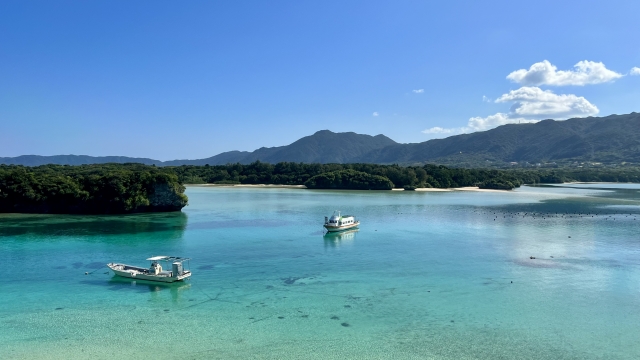
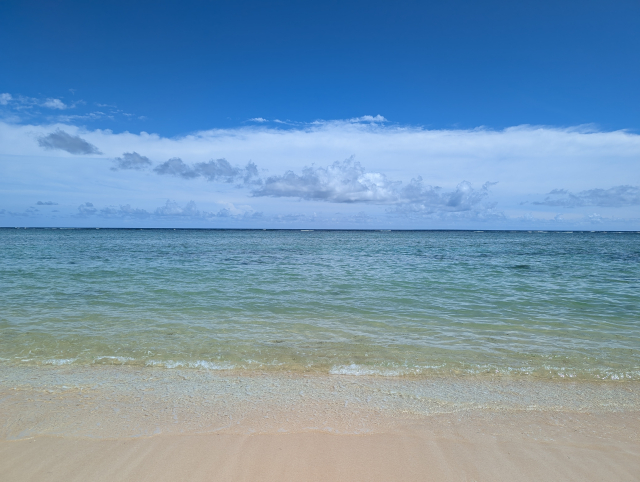
Sea-surface temperature off southern Ishigaki never drops below 23°C: 23.4°C in February at the lowest and 29.4°C in August. What changes is the air. In winter the sea is 4–5°C warmer than the air, so the water feels mild and getting out feels cold, especially with the north wind that blows from September to April.
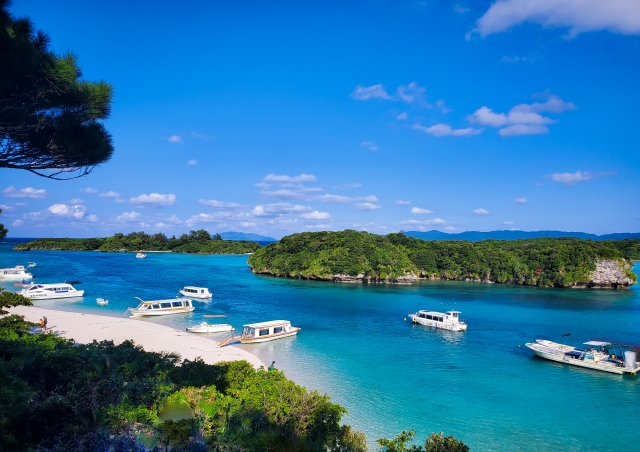
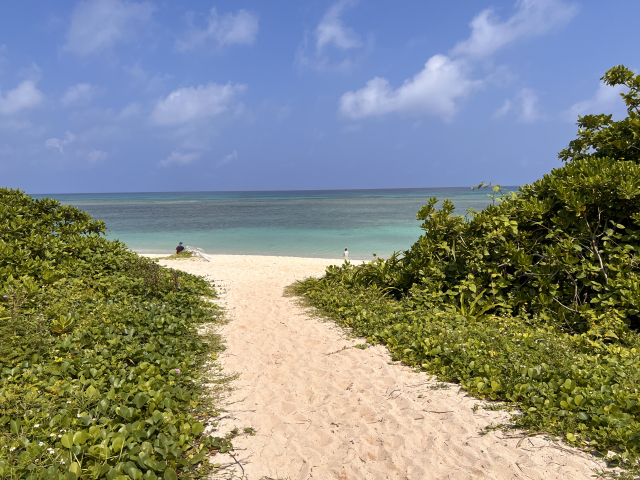
What defines the "swimming season" is supervision, not temperature. At the city-managed Sukuji Beach in Kabira, lifeguards and jellyfish nets are in place from April 1 to September 30 only. Okinawa Prefecture's box-jellyfish advisory runs June 1 to September 30. Hotel beaches differ: Fusaki Beach states that you can swim all year when it is sunny, with lifeguards on duty March 1 to October 31 and on request in winter. From October onward, bring a wetsuit (tour operators rent them), a windproof layer for afterwards, and a life jacket where there is no lifeguard. The Yaeyama sea-opening ceremony is held each March; in 2026 it was March 14 at Maesato Beach.
Month by month
| Month | Avg. temp (°C) | What to wear | Sea and notes |
|---|---|---|---|
| January | 18.9 | Long sleeves plus a jacket, wind protection | Off season, stargazing, sightseeing. Marathon weekend (3rd or 4th Sunday) fills hotels |
| February | 19.4 | Long sleeves plus a jacket | Quietest month (86,306 visitors in 2025) |
| March | 20.9 | Light long sleeves | Sea-opening ceremony, pleasant weather |
| April | 23.4 | Short sleeves plus a light layer | Beach season starts, water still cool. Triathlon weekend (2nd or 3rd Sunday) |
| May | 25.9 | Short sleeves plus rain gear | Rainy season begins |
| June | 28.4 | Short sleeves plus rain gear | Rainy season ends in the second half, then the best sea conditions |
| July | 29.6 | Summer clothes, sun and heat protection | Stable sea, high season starts |
| August | 29.4 | Summer clothes, sun and heat protection | Busiest month (163,665 visitors in 2025), highest prices, most typhoons |
| September | 28.2 | Summer clothes, sun protection | Still swimmable, second-busiest month, frequent typhoons |
| October | 26.0 | Short sleeves plus a light layer | Swimmable with a wetsuit, crowds ease, lifeguards gone from city beaches |
| November | 23.6 | Short or long sleeves | Comfortable, off season begins |
| December | 20.5 | Long sleeves plus a jacket | Off season, stargazing |
Temperatures are JMA monthly normals. Visitor numbers are Ishigaki City's 2025 monthly estimates.
Typhoons: August and September
JMA normals put typhoon approaches to the Okinawa region at 7.7 a year: 0.4 in May, 0.6 in June, 1.5 in July, 2.2 in August, 1.9 in September, 1.1 in October and 0.3 in November, with none from December to April. When a typhoon approaches, flights and ferries stop and you can be stuck on an island for days. Routes with few flights have no same-day alternative. Practical rules: keep a spare day after your planned return, check the cancellation terms of flights and hotels before you book, and do not pack the schedule.
When a cancellation is announced: check the airport's typhoon page (it links every airline's status and rebooking page), check Anei Kanko's and YKF's operating-status pages, rebook online rather than at the counter, and secure a bed for the night. You cannot stay overnight in the airport terminal.
Crowds: only January and February are quiet
Ishigaki City publishes monthly visitor numbers. In 2025 the peak was August (163,665) and the low was February (86,306), a ratio of about 1.9. Every other month from March to November sat between 110,000 and 140,000, and September was the second-busiest month despite the typhoon risk. In practice only January and February are noticeably quieter. On top of the monthly pattern, cruise-ship days bring several thousand people into downtown and the ferry terminal at once (the port accepts one ship a day; the schedule is published), and the marathon in January and the triathlon in April fill hotels and rental cars for those weekends.
So when should you go?
- Swimming with stable seas and manageable crowds: late June to early July, right after the rainy season, or September to October if you accept the typhoon risk.
- Low prices, stars and sightseeing: December to February. The Southern Cross season on Hateruma is late April to early June.
- July and August give the best sea conditions but the highest prices, the biggest crowds and the most typhoons. Book flights first (ANA opens sales 355 days ahead), then hotels, then boats and tours.
Next: How many nights do you need and Where to stay on Ishigaki.
Ishigaki month by month
One page per month with the weather normals, sea temperature, lifeguard dates, ferry timetable, crowds and what is on.
Sources
- Japan Meteorological Agency: climate normals for Ishigaki (1991–2020), sea-surface temperature (south of Ishigaki), typhoon normals
- Ishigaki City: monthly visitor estimates (2025, 2026), port cruise-ship schedule
- Ishigaki Tourism Association: Sukuji Beach, sea-opening 2026
- Fusaki Beach Resort FAQ
- Okinawa Prefecture: box-jellyfish advisory
- Ishigaki Airport: when a typhoon approaches
Figures are transcribed from official sites via our Japanese articles and were checked between August and October 2026. Schedules and fares change; confirm with the operators before you travel.